
Pinion Gears
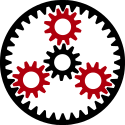
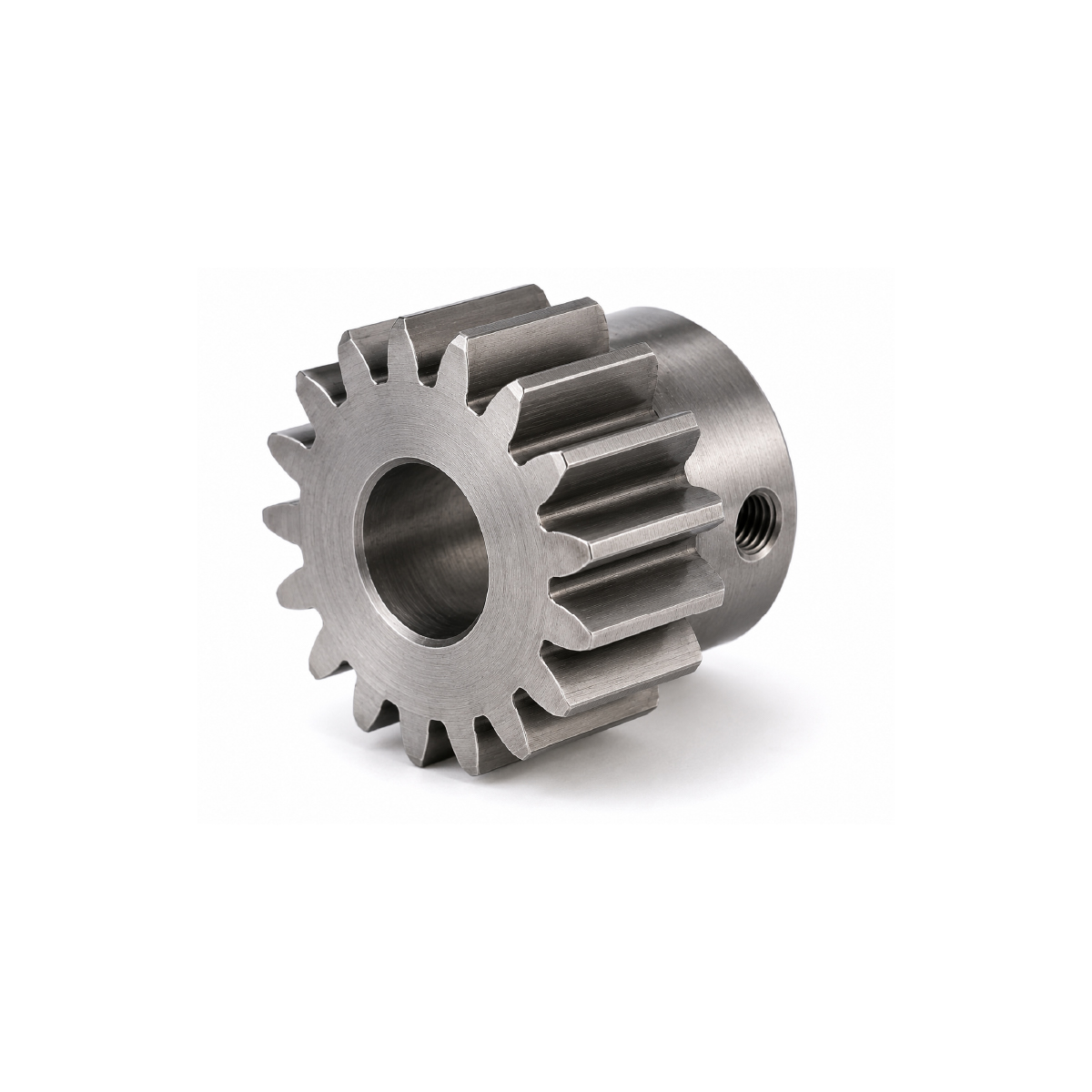
Pinion gears are essential mechanical components that typically operate with a larger gear or gear rack to transmit rotary motion and torque in machinery and power transmission systems. Thanks to their compact design and compatibility with various gearing systems, pinion gears are widely used in applications ranging from machinery manufacturing and automation to gearboxes and linear motion systems. At Erdişli Makina, we manufacture pinion gears for the requirements of various industries based on technical drawings, existing samples, and system operating conditions. In addition to new machinery projects, we manufacture custom pinion gears in various modules, numbers of teeth, tooth geometries, and materials for maintenance, overhaul, and spare-part requirements. A pinion is generally the smaller gear with fewer teeth in a mating gear pair. A pinion gear can transmit rotary motion and torque by operating with a larger mating gear, or it can be used with a gear rack to convert rotary motion into linear motion. Therefore, the term “pinion” describes the function of a gear within a system rather than one specific tooth geometry. Depending on the application, pinions can be manufactured with spur, helical, bevel, or other specialized tooth geometries. Pinion gears often operate at relatively high rotational speeds and remain in continuous contact with their mating gears. For this reason, proper material selection, tooth geometry, and manufacturing precision are essential. Depending on the application, technical parameters evaluated before manufacturing include: Module Number of teeth Face width Pressure angle Tooth geometry Pinion diameter Shaft diameter Hub design Keyway Rotational speed Transmitted torque Mating gear specifications Material Heat treatment Based on these parameters, we manufacture custom pinion gears for various machinery and power transmission systems. Pinion gears frequently operate together with larger-diameter gears. The ratio between the numbers of teeth in the gear pair plays an important role in determining the input and output speeds as well as torque characteristics of the system. For a pinion to operate correctly with its mating gear, both components must have compatible characteristics, including: Module Pressure angle Tooth profile Tooth geometry Center distance A correctly matched gear pair contributes to smoother power transmission, controlled wear, and longer service life. One of the most common applications of pinion gears is in rack and pinion systems. In these systems, a circular pinion gear engages with a linear gear rack. As the pinion rotates, the rack moves linearly forward or backward. Depending on the system design, the rack may remain stationary while the pinion and the connected mechanism travel along it. This configuration is particularly suitable for applications requiring long and controlled linear motion, including: CNC machines Portal systems Automation machinery Robotic applications Cutting machines Positioning systems In spur pinion gears, the teeth are formed parallel to the shaft axis. They can be used with compatible spur gears or straight-tooth racks to transmit power and motion. Thanks to their simple and robust design, spur pinions are widely used in industrial mechanisms. In spur pinion manufacturing, parameters such as module, number of teeth, pressure angle, and mating gear geometry must be correctly determined. In helical pinion gears, the teeth are formed at a specific angle to the shaft axis. The gradual engagement of the teeth can provide smoother and quieter operation in suitable applications. Helical pinions can operate with helical gears or compatible helical racks. In these systems, the helix angle and helix direction must be correctly matched with the mating component. In certain power transmission systems, the pinion gear can be manufactured as an integral part of the shaft rather than as a separate component mounted onto it. This type of component is commonly referred to as a pinion shaft or gear shaft. Manufacturing the pinion and shaft as a single component can provide a more compact design and a robust connection in certain applications. At Erdişli Makina, we provide custom manufacturing solutions for pinion shafts and similar integrated gear components according to application-specific technical requirements. We manufacture pinion gears according to technical drawings as well as from existing component samples. Pinion gears in machinery operating for many years may eventually become worn or damaged, requiring replacement. When technical documentation is unavailable or the original spare part can no longer be sourced, the existing pinion and, where possible, its mating gear can be examined to determine the required technical specifications. Sample-based manufacturing provides an effective solution particularly for: Older machinery Imported machinery Gearboxes CNC systems Rack and pinion mechanisms Custom-built machinery Maintenance and overhaul projects The material used for a pinion gear should be selected according to rotational speed, transmitted torque, contact loads, impact conditions, and operating duration. Depending on the application, pinion gears can be manufactured from: 4140 8620 1040 17CrNiMo6 Bronze Cast Polyamide Aluminum Other materials suitable for specific project requirements can also be evaluated. Particularly for small-diameter pinions operating at high rotational speeds, material selection and tooth surface durability are important factors affecting service life. Since pinion gears operate in continuous contact with their mating gears, their tooth surfaces may be exposed to high contact stresses and wear. Depending on application requirements and the material used, heat treatment processes such as carburizing, induction hardening, and nitriding can be applied. Appropriate heat treatment can help improve tooth surface wear resistance and extend the service life of the pinion. Pinion gears are fundamental components in a wide variety of power transmission and motion systems. Typical applications include: Industrial gearboxes Rack and pinion systems CNC machines Portal and gantry systems Industrial automation Robotic systems Conveyor systems Production lines Agricultural machinery Packaging machinery Textile machinery Metalworking machinery Lifting and material handling systems Machinery manufacturing Custom machinery and mechanisms Compatibility with the mating gear is one of the primary requirements for reliable pinion gear operation. During selection and manufacturing, particular attention should be given to: Module Number of teeth Pressure angle Tooth geometry Spur or helical tooth configuration Rotational speed Transmitted torque Mating gear specifications Center distance Shaft and hub connection Keyway Material Heat treatment Lubrication conditions Operating environment Since a pinion typically has fewer teeth than the larger gear in a gear pair, each pinion tooth may engage with the mating gear more frequently over the same operating period. As a result, pinion gears can be exposed to higher cyclic loading and more intensive wear than their larger mating gears in certain applications. Proper material selection, appropriate surface hardness, correct lubrication, and accurate alignment of the gear pair are therefore essential for achieving a long pinion service life. During maintenance, it is recommended that both the pinion and its mating gear be inspected. For applications where standard products are insufficient, we provide custom pinion gear manufacturing. Pinion specifications can be customized according to application requirements, including: Module Number of teeth Face width External dimensions Tooth geometry Hub design Shaft bore Keyway Material Heat treatment specifications In addition to manufacturing new components according to technical drawings, pinion gears that are not commercially available can be reproduced from existing samples. Depending on project requirements, the mating gear or gear rack can also be manufactured according to the technical specifications of the system. After prolonged operation in industrial machinery, pinion teeth may experience wear, breakage, or surface damage. When the original replacement part is unavailable, the existing pinion and, where possible, its mating gear can be evaluated to manufacture a suitable replacement. This approach enables replacement components required for the maintenance and overhaul of older, imported, or custom-built machinery to be reproduced. With experience in machine gear and spare-part manufacturing since 1987, we provide custom manufacturing solutions for the power transmission requirements of various industries. We manufacture pinion gears, rack and pinion systems, and custom gear components according to technical drawings or existing samples. By evaluating tooth geometry, material selection, mating gear compatibility, and operating conditions together, we aim to manufacture reliable, durable, and long-lasting power transmission components. For pinion gears, rack pinions, custom-sized pinions, pinion shafts, or pinion gears manufactured from existing samples, contact Erdişli Makina.Pinion Gear Manufacturing for Precise and Reliable Power Transmission
What Is a Pinion Gear?
Erdişli Pinion Gear Manufacturing
Pinion and Gear Systems
Rack and Pinion Systems
Spur Pinion Gears
Helical Pinion Gears
Pinion Shafts
Manufacturing from Technical Drawings or Samples
Materials
Heat Treatment Options
Applications of Pinion Gears
What Should Be Considered When Selecting a Pinion Gear?
Wear in Pinion Gears
Custom Pinion Gear Manufacturing
Pinion Gear Manufacturing for Maintenance and Overhaul
Why Erdişli Makina?