

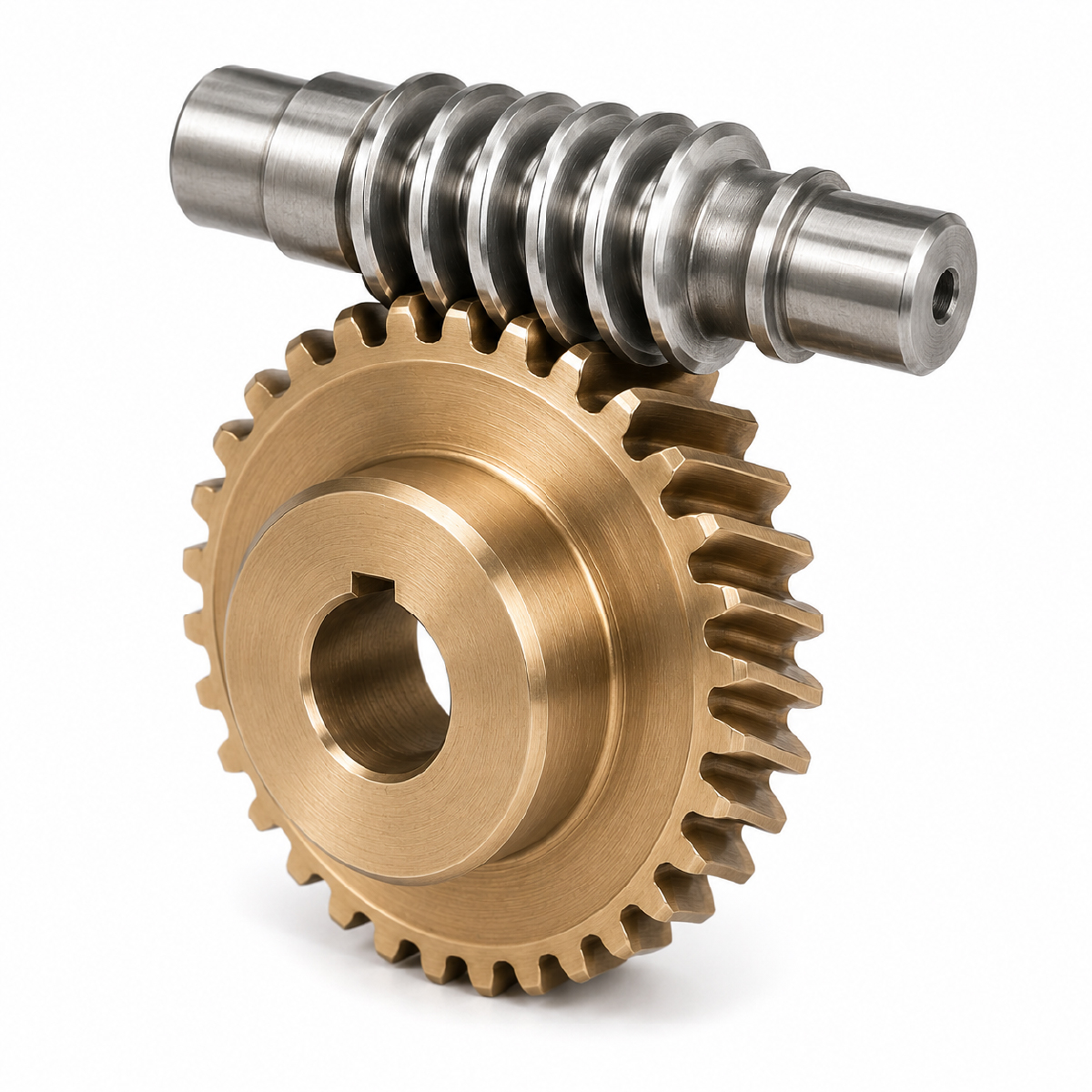
Worm Gears and Worm Shafts
Worm gear systems are specialized power transmission mechanisms used to achieve high reduction ratios, change the direction of motion, and transmit power within a compact mechanical arrangement. They are particularly suitable for applications requiring low output speeds and high torque. At Erdişli Makina, we manufacture worm shafts and worm gears for various machinery and industrial applications based on technical drawings, existing samples, and the operating conditions of the system. In addition to new machinery projects, we manufacture worm shafts and worm gears in various dimensions, materials, and technical specifications for maintenance, overhaul, and spare-part requirements. A worm drive system consists of two main mechanical components designed to operate together. The worm shaft (worm) is the driving component with a helical, screw-like profile. The worm gear (worm wheel) is the mating gear with a specially designed tooth geometry that engages with the worm. Together, these components transmit rotary motion and torque, typically between shafts positioned at a 90-degree angle to each other. One of the key characteristics of a worm gear system is its ability to achieve high reduction ratios in a single stage. For this reason, worm drives are widely used in gearboxes and speed-reduction applications. In most applications, the worm shaft acts as the driving component. As the worm rotates, its helical surface engages with the teeth of the worm gear, causing the gear to rotate. The number of starts on the worm and the number of teeth on the worm gear are among the primary parameters determining the gear ratio. This operating principle allows high input speeds to be significantly reduced to achieve lower output speeds. Depending on system conditions, reducing the speed can also provide higher torque at the output. In worm gear manufacturing, geometric compatibility between the worm shaft and worm gear is essential. Tooth profile, module, pitch, number of worm starts, number of gear teeth, center distance, and contact geometry can directly affect system performance. At Erdişli Makina, we manufacture worm shafts and worm gears according to the technical requirements of each application. In addition to manufacturing new components from technical drawings, we can reproduce existing worm gear sets based on samples. Although the worm shaft and worm gear are separate components, they operate together as a matched gear set. For this reason, particularly in new manufacturing projects, both components should be evaluated together to ensure proper compatibility. Correct contact between the worm and worm gear is important for: Smooth power transmission Reduced operating noise Balanced load distribution Controlled wear Longer service life Efficient system operation When only one component of an existing system needs to be replaced, the condition and wear of the mating component should also be evaluated. We manufacture worm shafts and worm gears according to technical drawings as well as from existing samples. In machinery that has been operating for many years, technical drawings may no longer be available or original replacement parts may have been discontinued. In such cases, the necessary dimensions and technical specifications can be evaluated from the existing worm shaft and worm gear samples to manufacture replacement components. Sample-based manufacturing provides an effective solution for: Older machinery Imported machinery Gearboxes Systems with unavailable spare parts Custom-built machinery Maintenance and overhaul operations Proper material pairing is particularly important in worm gear systems. Because sliding contact occurs between the mating surfaces during operation, friction and wear characteristics differ from those of many other gear systems. For this reason, different materials can be selected for the worm shaft and worm gear depending on the application. Depending on requirements, components can be manufactured from: 4140 8620 1040 17CrNiMo6 Bronze Cast Polyamide Aluminum Other materials suitable for specific project requirements can also be evaluated. One of the most widely used combinations in worm drive systems is a steel worm shaft paired with a bronze worm gear. Bronze is commonly preferred for worm gear applications due to its suitability for sliding contact, favorable wear characteristics, and compatibility with steel mating components. However, the appropriate bronze alloy and worm shaft material should be selected according to factors such as transmitted torque, rotational speed, operating temperature, lubrication, and required service life. Surface strength and wear resistance can be particularly important for the worm shaft in terms of service life. Depending on the material and application requirements, heat treatment processes such as carburizing, induction hardening, and nitriding can be considered. The appropriate heat treatment process should be determined according to the component material, operating load, required surface characteristics, and conditions created by contact with the mating component. Worm gear mechanisms offer significant advantages, particularly in applications where high reduction ratios must be achieved within a compact design. Key advantages include: High reduction ratios in a single stage Low output speed capability Suitability for high-torque applications Power transmission typically between 90° shafts Compact mechanical design Smooth and controlled motion transmission Manufacturing flexibility in different sizes and ratios Wide range of material options Suitability for gearbox applications Compatibility with custom machinery designs An important characteristic of worm gear systems is that they may exhibit self-locking behavior under certain design and operating conditions. With appropriate geometry, it may be difficult or impossible for the worm gear to back-drive the worm shaft. However, self-locking is not a feature of every worm gear system. Helix angle, coefficient of friction, material pairing, lubrication, and operating conditions directly affect whether the system can be back-driven. Therefore, in safety-critical applications, the self-locking characteristics of a worm gear system should not be relied upon as the sole safety measure. Appropriate mechanical brakes and additional safety systems should also be considered. Worm gear mechanisms are used in a wide variety of industrial systems requiring high-ratio speed reduction and changes in the direction of motion. Typical applications include: Worm gearboxes Conveyor systems Lifting and material handling machinery Packaging machinery Food processing machinery Textile machinery Agricultural machinery Production lines Industrial automation systems Machinery manufacturing Positioning mechanisms Rotary mechanisms Heavy industrial equipment Custom machinery and mechanisms Numerous technical parameters determine the performance of a worm gear system. During selection and manufacturing, particular attention should be given to: Module Number of worm gear teeth Number of worm starts Reduction ratio Center distance Input and output speeds Transmitted torque Tooth geometry Material pairing Heat treatment Lubrication conditions Operating temperature Operating duration Shaft and bearing arrangement Particularly under high loads and continuous operating conditions, proper lubrication and material selection are critical to achieving a long service life. For machinery and mechanical systems where standard components are insufficient, we provide custom worm gear and worm shaft manufacturing. Component diameters, module, number of teeth, number of worm starts, hub design, shaft bore, keyway, material, and other technical specifications can be customized according to project requirements. In addition to manufacturing new components from technical drawings, our ability to reproduce parts from existing samples enables us to provide custom solutions for components that are no longer commercially available. In worm gear systems operating over long periods, friction can cause wear on the tooth and contact surfaces. Insufficient lubrication, high operating temperatures, excessive loads, or improper material pairing can accelerate this wear. When an existing worm shaft or worm gear reaches the end of its service life and an original replacement part is unavailable, a replacement can be manufactured based on the existing sample. Particularly during gearbox maintenance and overhaul operations, the condition of the existing gear set can be evaluated and the required worm shaft and worm gear components can be reproduced accordingly. With experience in machine gear and spare-part manufacturing since 1987, we provide manufacturing solutions for specialized power transmission requirements across various industries. Our ability to manufacture according to technical drawings or existing samples enables us to produce components not only for new projects but also for the maintenance and overhaul of older, imported, or discontinued machinery. In worm gear and worm shaft manufacturing, we evaluate tooth geometry, material compatibility, operating conditions, and application requirements together with the aim of providing reliable and long-lasting power transmission solutions. For worm gear and worm shaft manufacturing, custom-sized components, gearbox spare parts, or sample-based manufacturing requirements, contact Erdişli Makina.Worm Gear and Worm Shaft Manufacturing for High Reduction Ratios
What Are Worm Shafts and Worm Gears?
How Does a Worm Gear System Work?
Erdişli Worm Gear and Worm Shaft Manufacturing
Worm Gear Sets
Manufacturing from Technical Drawings or Samples
Material Selection
Bronze Worm Gears
Heat Treatment Options
Advantages of Worm Gear Systems
Self-Locking Characteristics
Applications of Worm Gear Systems
What Should Be Considered When Selecting a Worm Gear System?
Custom Worm Gear and Worm Shaft Manufacturing
Worm Gear Manufacturing for Maintenance and Overhaul
Why Erdişli Makina?