

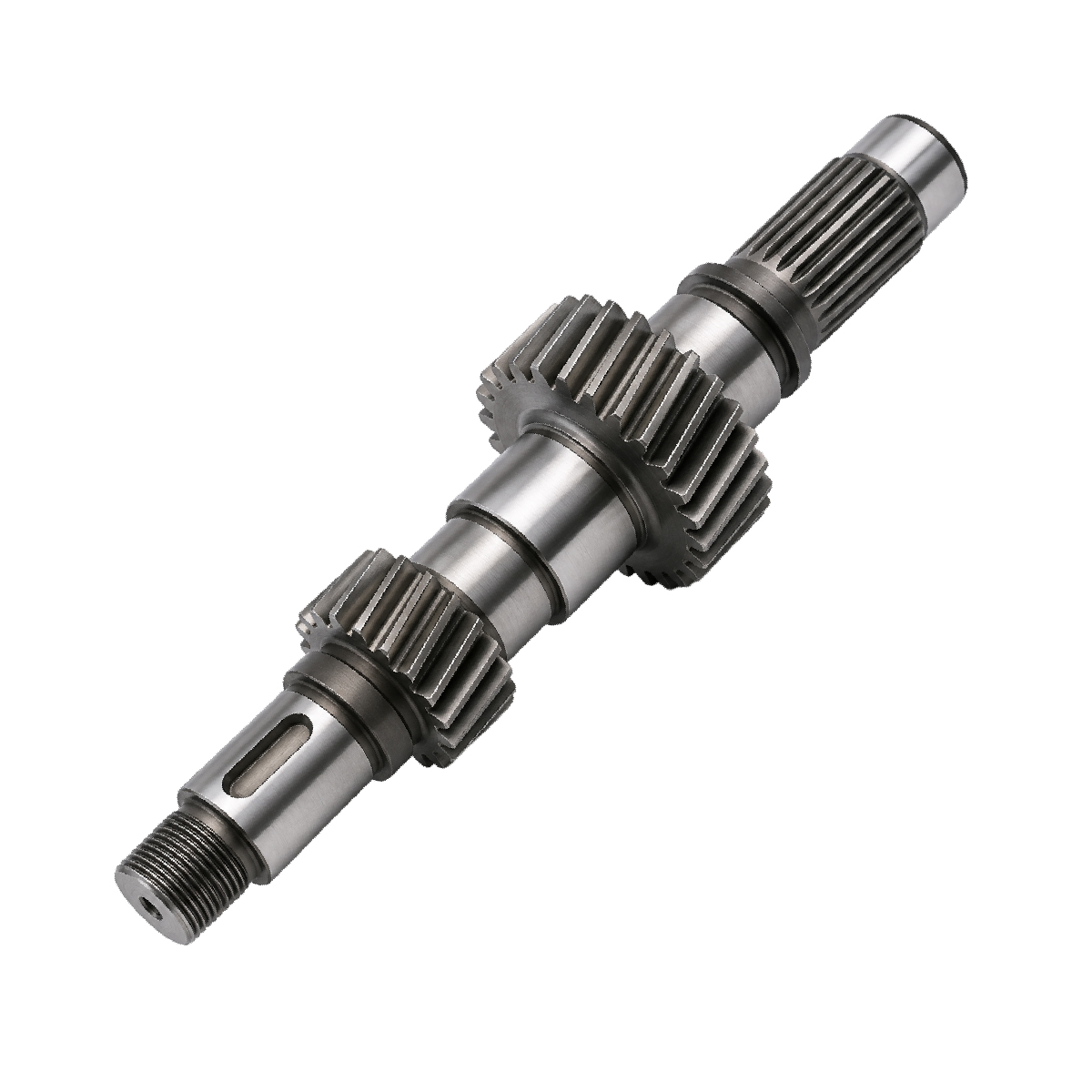
Gear Shafts
Gear shafts are essential machine components in which the shaft and gear geometry are integrated into a single part for transmitting rotary motion and torque. They are particularly preferred in mechanical systems where mounting a separate gear onto a shaft is not suitable and where compact design, high connection strength, and precise operation are required. At Erdişli Makina, we manufacture gear shafts for various machinery and industrial applications according to technical drawings, existing samples, and specific operating conditions. In addition to new machinery projects, we provide custom gear shaft manufacturing in various diameters, lengths, tooth geometries, and materials for maintenance, overhaul, and spare-part requirements. A gear shaft is a mechanical power transmission component manufactured by machining gear teeth directly onto a section of a shaft or by forming the gear geometry as an integral part of the shaft body. In conventional systems, a gear may be manufactured separately and mounted onto the shaft using a key, spline, or other connection method. In a gear shaft, however, the gear and shaft are integrated into a single component. Depending on the application, this design can help reduce the number of connection components, create a more compact mechanism, and eliminate potential connection issues between the gear and shaft. Gear shaft manufacturing requires not only accurate tooth geometry but also precise machining of all functional areas of the shaft. Depending on the application, a gear shaft may include: Gear sections Shaft diameters Bearing surfaces Shoulders Grooves and connection areas Keyways Threaded sections Circlip grooves Mounting surfaces For this reason, gear shaft manufacturing is a specialized production process that combines gear manufacturing with precision shaft machining. One of the most common types of gear shafts is the pinion shaft. A pinion shaft is a power transmission component in which a small-diameter pinion gear is manufactured as an integral part of the shaft. It is commonly used in gearboxes and mechanisms transmitting high torque. Manufacturing the pinion as an integral part of the shaft rather than mounting it as a separate component can provide a more robust and compact design in certain applications. At Erdişli Makina, we manufacture pinion shafts and custom gear shafts in various dimensions according to technical drawings or existing samples. In spur gear shafts, the teeth are formed parallel to the shaft axis. This configuration can be used in many machinery and gearbox systems where power is transmitted between parallel shafts. In spur gear shaft manufacturing, parameters such as module, number of teeth, face width, shaft dimensions, and mating gear specifications must be correctly determined. In helical gear shafts, the teeth are formed at a specific angle to the shaft axis. The gradual engagement provided by helical tooth geometry can offer smoother and quieter operation in suitable applications. Technical parameters that must be accurately determined when manufacturing helical gear shafts include: Module Number of teeth Helix angle Helix direction Face width Mating gear geometry Helical gear shafts are widely used particularly in gearboxes and industrial power transmission systems. Manufacturing the gear and shaft as a single component can provide significant advantages in certain mechanical applications. Key advantages include: Reduced need for additional connections between the gear and shaft Compact mechanical design Reduced connection backlash Suitability for high-torque transmission Integrated coaxial gear and shaft structure Reduced number of connection components Adaptability to high-speed applications Suitability for custom machinery designs Compatibility with gearbox systems Manufacturing flexibility with different tooth geometries However, the suitability of an integrated gear shaft design should be evaluated according to system design, maintenance requirements, and operating conditions. We manufacture gear shafts according to technical drawings as well as from existing component samples. Technical drawings of gear shafts used in older or imported machinery may not always be available. In such cases, the required dimensions, tooth geometry, and connection details can be determined by examining the existing gear shaft, allowing a replacement component to be manufactured. Sample-based gear shaft manufacturing provides an effective solution particularly for: Older machinery Imported machinery Industrial gearboxes Custom-built machinery Production lines Equipment with unavailable spare parts Maintenance and overhaul projects Gear shafts may be subjected to contact loads on the gear teeth as well as torsional and bending loads along the shaft. For this reason, material selection should be based on the operating conditions of the component. Depending on the application, gear shafts can be manufactured from: 4140 8620 1040 17CrNiMo6 Other metallic materials suitable for specific project requirements can also be evaluated. When selecting the material, factors such as transmitted torque, rotational speed, impact loads, shaft diameter, bearing arrangement, and required surface properties should be considered. Wear resistance of the tooth surfaces can be particularly important in gear shaft applications. Depending on the selected material and technical requirements of the application, heat treatment processes such as carburizing, induction hardening, and nitriding can be evaluated. Heat treatment can provide the required tooth surface hardness and wear resistance while the overall mechanical properties of the component must remain suitable for the application. For components such as gear shafts that function both as a shaft and a gear, selecting the appropriate combination of material and heat treatment is essential for achieving a long service life. The gear geometry, bearing surfaces, and other shaft diameters must be accurately positioned along the same operating axis. Misalignment or unsuitable geometric tolerances can cause problems during operation, including: Vibration Noise Uneven tooth contact Excessive bearing loads Accelerated tooth wear Increased operating temperature For this reason, both tooth geometry and the dimensional and geometric accuracy of the shaft are critical factors in gear shaft manufacturing. When designing and manufacturing a gear shaft, all functions of the component within the system should be evaluated together. Key technical criteria include: Gear type Module Number of teeth Pressure angle Helix angle and direction Face width Shaft diameters Shaft length Bearing areas Rotational speed Transmitted torque Bending and torsional loads Mating gear specifications Material Heat treatment Lubrication conditions Gear shafts are used in a wide range of industrial systems where high power transmission and compact mechanical design are important. Typical applications include: Industrial gearboxes Machinery manufacturing Production lines Conveyor systems Agricultural machinery Metalworking machinery Packaging machinery Textile machinery Food processing machinery Lifting and material handling systems Industrial automation Heavy industrial machinery Custom machinery and mechanisms Gearbox systems are among the most important application areas for gear shafts. Depending on the gearbox design, gear shafts with different geometries can be used on the input, intermediate, or output stages. In gearboxes operating over long periods, damage to tooth surfaces, bearing areas, or the shaft itself may eventually require component replacement. When the original spare part is unavailable, the existing gear shaft and mating gears can be evaluated to manufacture a suitable replacement. For this reason, gear shaft manufacturing is an important spare-part solution for gearbox maintenance and overhaul projects. For applications where standard components are insufficient, we provide custom gear shaft manufacturing. Component specifications can be customized according to technical drawings or application requirements, including: Overall length Shaft diameters Gear diameter Module Number of teeth Face width Tooth geometry Helix angle Bearing areas Grooves and connection details Material Heat treatment specifications This enables us to reproduce gear shafts that are not commercially available or that were specifically designed for a particular machine. After prolonged operation, gear shafts may experience tooth wear, breakage, shaft surface wear, or damage to bearing areas. Particularly in gearboxes and heavy industrial applications, a damaged gear shaft can affect the operation of the entire system. When standard replacement parts are unavailable, a new gear shaft can be manufactured using the existing component as a sample, providing an effective solution for machinery maintenance and overhaul. With experience in machine gear and spare-part manufacturing since 1987, we provide manufacturing solutions for specialized power transmission components across various industries. According to technical drawings or existing samples, we manufacture spur gear shafts, helical gear shafts, pinion shafts, and machine-specific custom gear shafts. By evaluating all technical characteristics of the component—from tooth geometry and shaft dimensions to material selection and heat treatment requirements—together with its operating conditions, we aim to provide reliable and long-lasting manufacturing solutions. For gear shafts, pinion shafts, gearbox gear shafts, custom gear shafts, or gear shafts manufactured from existing samples, contact Erdişli Makina.Precision Gear Shaft Manufacturing for Power Transmission Systems
What Is a Gear Shaft?
Erdişli Gear Shaft Manufacturing
Pinion Shafts
Spur Gear Shafts
Helical Gear Shafts
Advantages of an Integrated Gear and Shaft Design
Manufacturing from Technical Drawings or Samples
Materials
Heat Treatment Options
Why Is Precision Important in Gear Shafts?
What Should Be Considered When Selecting a Gear Shaft?
Applications of Gear Shafts
Gear Shaft Manufacturing for Gearboxes
Custom Gear Shaft Manufacturing
Gear Shaft Manufacturing for Maintenance and Overhaul
Why Erdişli Makina?