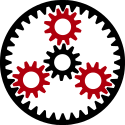


Helical Gears
Helical gears are widely used in mechanical systems requiring high power and torque transmission. Since the teeth are positioned at a specific angle to the shaft axis, engagement occurs gradually. This design provides smoother, quieter operation with reduced vibration, particularly in high-speed applications. At Erdişli Makina, we manufacture helical gears for a wide range of industries and machinery applications based on technical drawings, existing samples, and specified operating conditions. In addition to new machinery and equipment projects, we manufacture helical gears in various sizes and specifications for maintenance, overhaul, and spare-part requirements. A helical gear is a cylindrical gear in which the teeth are formed at a specific helix angle rather than parallel to the axis of rotation. While tooth engagement occurs more abruptly in spur gears, helical gear teeth engage gradually. Since multiple teeth can be in contact simultaneously, the load can be distributed more evenly. This is one of the main reasons why helical gears are preferred in applications requiring high loads and rotational speeds. Depending on the application, helical gears can be used for power transmission between parallel shafts as well as in other mechanical systems with appropriate gear geometries. In helical gear manufacturing, it is essential to accurately determine parameters such as tooth geometry, helix direction, helix angle, module, number of teeth, and material. At Erdişli Makina, we manufacture helical gears with different specifications according to the technical requirements of each application. Our manufacturing capabilities cover gear diameters ranging from Ø20 mm to Ø1300 mm. This wide production range enables us to provide solutions for applications ranging from small mechanical systems to large industrial machinery and equipment. Helical gears can be manufactured with either right-hand or left-hand helix configurations, depending on the direction of the tooth inclination. Correctly determining the helix direction is critical to ensuring compatibility between mating gears. During manufacturing, the helix direction and angle are determined according to the technical drawing or evaluated from an existing sample. A complete technical drawing is not always required to manufacture a new helical gear. An existing worn or damaged helical gear removed from a machine can be evaluated to determine the required dimensions and technical specifications, allowing a replacement gear to be manufactured accordingly. This approach provides a significant advantage particularly for older machinery with discontinued parts, imported equipment, custom-built systems, and applications where replacement parts are difficult to source. When technical drawings are available, manufacturing can be carried out according to the specified dimensions and technical requirements. Material selection for helical gears should be based on transmitted torque, rotational speed, operating load, impact conditions, and the working environment. Depending on the application, helical gears can be manufactured from: 4140 8620 1040 17CrNiMo6 Bronze Cast Polyamide Aluminum Other materials suitable for the technical requirements of the project can also be evaluated. Selecting the appropriate material is one of the key factors directly affecting gear performance and service life. For helical gears operating continuously, carrying high loads, or exposed to significant wear, appropriate heat treatment can help improve durability and extend service life. Depending on application requirements, heat treatment processes such as carburizing, induction hardening, and nitriding can be applied. The appropriate heat treatment method is determined according to the material, operating conditions, and required surface properties of the gear. One of the primary advantages of helical gears is their ability to provide smoother power transmission due to the gradual engagement of the teeth. Key advantages include: High power and torque transmission capacity Quieter operation Reduced vibration Improved load distribution across multiple teeth Suitability for high-speed applications Durable and long-lasting construction Manufacturing flexibility across different sizes and modules Right-hand and left-hand helix options Wide range of material options Extensive use in industrial applications Helical gears are particularly suitable for machinery systems requiring high power transmission, continuous operation, and reduced vibration. Typical applications include: Industrial gearboxes Machinery manufacturing Production lines Conveyor systems Automation machinery Metalworking machinery Packaging machinery Textile machinery Agricultural machinery Food processing machinery Heavy industrial equipment Various mechanical power transmission systems In spur gears, the teeth are positioned parallel to the shaft axis, while in helical gears, the teeth are formed at a specific angle. This geometric difference also affects their operating characteristics. The gradual tooth engagement of helical gears can provide quieter and smoother operation. In addition, having multiple teeth in contact simultaneously can allow higher loads to be transmitted. However, the helix angle generates axial thrust. Therefore, when designing a system using helical gears, bearings and other mechanical components must be selected and designed to accommodate the resulting axial forces. In addition to standard dimensions, we manufacture custom helical gears for specific machinery and project requirements. Gear specifications can be customized according to the application, including: Outside diameter Module Number of teeth Helix angle Helix direction Hub design Shaft bore Keyway Material Heat treatment specifications This enables us to provide custom manufacturing solutions for both new machinery projects and gears required for maintenance and overhaul operations. Operating in machine gear and spare-part manufacturing since 1987, Erdişli Makina combines decades of manufacturing experience with custom production solutions tailored to the requirements of various industries. With manufacturing capabilities ranging from Ø20 mm to Ø1300 mm, we serve a broad range of applications, from small mechanical components to large industrial gears. By manufacturing helical gears according to technical drawings or existing samples, we provide solutions for the new production, maintenance, overhaul, and spare-part requirements of customers in both domestic and international markets. For helical gear manufacturing, custom-sized production, or replacement gears manufactured from existing samples, contact Erdişli Makina.Helical Gear Manufacturing for Quiet, Powerful and Efficient Power Transmission
What Is a Helical Gear?
Erdişli Helical Gear Manufacturing
Right-Hand and Left-Hand Helical Gear Manufacturing
Manufacturing from Technical Drawings or Samples
Materials
Heat Treatment Options
Advantages of Helical Gears
Applications of Helical Gears
What Is the Difference Between Spur Gears and Helical Gears?
Custom Helical Gear Manufacturing
Why Erdişli Makina?